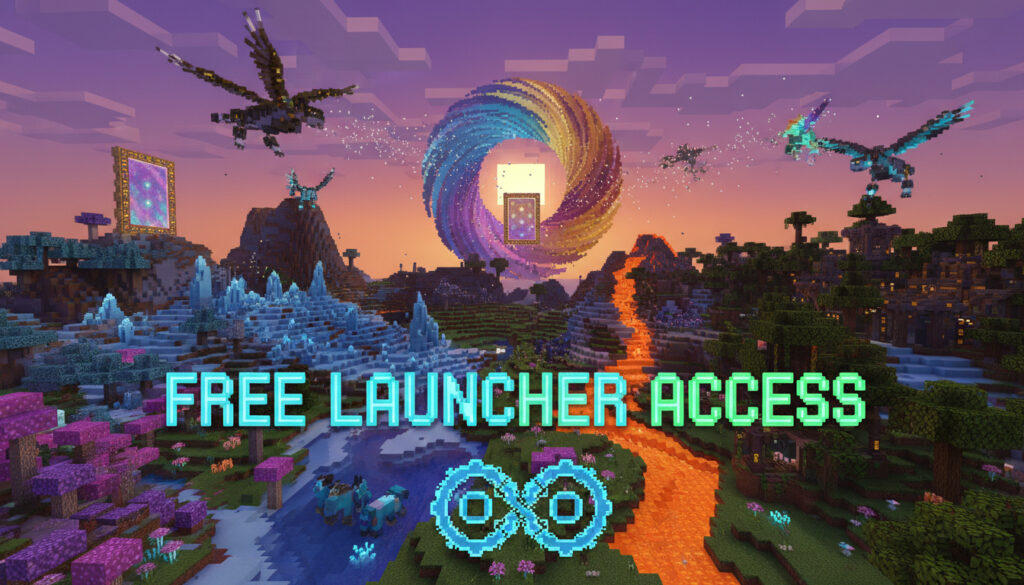
Tlauncher – Darmowy Launcher do Minecraft z Modami
Introduction
TLauncher represents one of the most controversial entry points into the Minecraft ecosystem. Marketed as a free alternative to the official Microsoft launcher, it enables gameplay without valid license authentication, attracting millions of users seeking unrestricted access to Mojang’s sandbox universe. The platform’s architecture circumvents standard account verification protocols, distributing modified game executables through proprietary channels. While its convenience factor remains undeniable, cybersecurity analysts consistently flag the software for aggressive advertising modules and potential privacy vulnerabilities.
Core Capabilities
- Offline gameplay without Microsoft account credentials
- Integrated skin library with HD texture support
- Automatic Forge and Fabric mod installation
- Multi-version compatibility spanning Classic to 1.20+
- Custom server bookmarking and rapid join features
Operational Insights
The launcher operates by intercepting Minecraft’s authentication handshake, replacing official validation servers with local emulators. This technique allows users to launch the game using arbitrary usernames, effectively bypassing Mojang’s license verification infrastructure. Unlike the official client, which requires mandatory migration to Microsoft accounts, TLauncher maintains legacy username systems. However, this convenience introduces significant architectural risks. The installer frequently bundles potentially unwanted programs (PUPs), including browser hijackers and cryptocurrency miners disguised as optimization utilities. Independent security audits reveal that several distribution mirrors inject additional payloads into the base executable, creating persistent system vulnerabilities.
Feature Comparison
| Capability | TLauncher | Official Launcher |
|---|---|---|
| Account Requirements | None (Offline mode) | Mandatory Microsoft account |
| Multiplayer Access | Limited to cracked servers | Full official server support |
| Security Updates | Delayed third-party patches | Immediate Mojang distribution |
| Mod Repository | Integrated but unverified | Curated Marketplace integration |
| Data Collection | Unregulated telemetry | GDPR-compliant Microsoft policies |
Technical Specifications
Installation requires Java Runtime Environment 8 or newer, though the package often includes bundled Java distributions to simplify deployment. The application consumes approximately 150MB of disk space for the base launcher, with additional gigabytes required for game assets. Notably, the Windows installer attempts to modify system registry keys to disable Windows Defender real-time scanning during extraction—a behavior documented by Microsoft’s security guidelines as characteristic of potentially harmful software. macOS versions require manual security exceptions in Gatekeeper settings, while Linux distributions rely on community-maintained repositories lacking code signing verification.
Development Timeline
2013 marked the initial release, capitalizing on Minecraft’s Beta 1.8 era when account verification remained less stringent. By 2016, the platform integrated cloud-based skin servers, allowing texture customization without Mojang’s official infrastructure. The 2021 Microsoft account migration mandate dramatically increased TLauncher’s user base as players sought methods to avoid linking Mojang legacy accounts to Microsoft ecosystems. 2023 brought significant scrutiny when multiple cybersecurity firms identified trojanized versions distributed through SEO-optimized mirror sites. Recent iterations incorporate blockchain-related bloatware and advertising modules that consume substantial CPU resources during idle states.
Legal and Safety Clarifications
Possession of TLauncher violates Minecraft’s End User License Agreement, specifically clauses prohibiting circumvention of technological protection measures. However, criminal prosecution remains rare for individual users, targeting primarily high-volume distributors. The software exists in a gray zone of copyright enforcement, distinct from direct piracy but functionally equivalent in denying revenue to rightsholders. Critical safety concerns extend beyond legal liability. The launcher requests elevated system permissions during installation, granting access to browser cookies and cryptocurrency wallets. Forensic analysis demonstrates that certain builds exfiltrate Discord tokens and browser autofill data to remote servers, compromising user privacy beyond the scope of standard analytics.
Risk Assessment
From a cybersecurity perspective, TLauncher exemplifies the trade-offs between accessibility and integrity. The software’s monetization relies heavily on affiliate marketing schemes and cryptomining scripts rather than user subscriptions. When evaluating application security protocols, users must recognize that unofficial launchers lack the code-signing certificates and sandboxing that protect official distributions. Network traffic analysis reveals persistent connections to domains associated with advertising networks flagged by Malwarebytes threat intelligence. The absence of transparent development practices—no public repository, anonymous maintainers, and closed-source binaries—prevents security auditing by independent researchers. For institutions and enterprise environments, the software represents an unacceptable attack vector that bypasses standard software inventory controls.
Community Perspectives
“I used it for three months before noticing my GPU usage spiked at idle. After uninstalling and running a deep scan, I found three separate cryptocurrency miners embedded in the Java processes.”
System Administrator, Reddit r/sysadmin discussion
“While we understand economic barriers exist, distributing unauthorized client modifications undermines the ecosystem that sustains Java Edition development. The security risks significantly outweigh the subscription savings.”
Minecraft Community Manager, Discord Q&A session
Strategic Summary
TLauncher delivers functional Minecraft access without financial investment, appealing to users in regions with limited payment infrastructure or restrictive currency controls. However, the operational model relies on invasive advertising and potential data harvesting to offset development costs. For dedicated players, the risks of credential theft, system compromise, and account bans render the official Minecraft acquisition methods significantly more sustainable. The launcher’s continued popularity reflects broader tensions in software accessibility versus security, serving as a cautionary example of convenience-driven compromise. Users prioritizing digital hygiene should consider legitimate alternatives like the official demo mode or Minecraft Education Edition for restricted environments.
Frequently Asked Questions
Does TLauncher contain viruses?
Official distributions from the primary website typically contain potentially unwanted programs rather than explicit malware, though numerous mirror sites distribute trojanized versions containing credential stealers and cryptocurrency miners. The software’s aggressive advertising modules and browser hijackers classify it as adware by most security standards. Users should assume elevated risk compared to officially sanctioned launchers.
Can I play on official servers using TLauncher?
No. TLauncher lacks valid authentication tokens required by Minecraft’s multiplayer infrastructure. Users are restricted to cracked or offline-mode servers that disable Mojang’s verification systems. Attempting to connect to Hypixel, Mineplex, or other major networks results in immediate disconnection with “Invalid Session” errors.
Why does my antivirus flag TLauncher?
Detection occurs due to behavioral analysis identifying registry modifications, attempts to disable security software during installation, and unauthorized network connections to advertising servers. These actions match heuristic signatures for trojans and potentially unwanted applications, triggering automatic quarantine by Windows Defender, Norton, and Kaspersky products.
Is using TLauncher illegal?
Usage violates Minecraft’s End User License Agreement and constitutes copyright infringement under the Digital Millennium Copyright Act in the United States, specifically regarding circumvention of access controls. While criminal charges against individual users remain uncommon, distributing the software carries significant legal liability. Civil action from Microsoft’s legal teams typically targets repository hosts and website operators rather than end users.
Wiecej powiazanych wpisow
 Stranger Things obsada – pełna lista aktorów we wszystkich sezonach
 Cha – co to znaczy? ChatGPT, herbata czy taniec
 Piotr Rubik: choroba, rodzina i wiek w pigułce
 Farciarz Gilmore – sequel, obsada i premiera na Netflix
 Kask na hulajnogę elektryczną – jaki wybrać
 Express Ilustrowany – nakład, gdzie kupić i wiadomości
 Kabarety polskie: znane grupy, rankingi, składy i aktualności
 DDD: kompleksowe wyjaśnienie znaczenia medycznego choroby krążka
